
Planning a trip to China? This guide covers itineraries, visas, transport, costs, and the best places to visit — based on real travel experience! We spent 30 days in China in November 2025, visiting places like Zhangjiajie, Yunnan, Guilin, Shanghai and more!



Disclosure: This post contains affiliate links. If you book through them, we may earn a small commission at no extra cost to you.
Table of Contents
China at a Glance
Visa:
Visa information can fluctuate and changes are possible, make sure to keep yourself up to date with your countries advisory.
Currently, as of early 2026, China has made some changes to their visa system recently and now it is possible for many countries to visit visa free! Australians can visit for up to 30 days for the purpose of tourism, family, business and transit. Other countries that are included in this can be found at their website. Check out the details there to confirm your eligibility. This is how we visited on our recent trip.
As of early 2026 USA citizens are eligible for a 10-day stay if transiting through China to a third country or region. (NOTE: not a USA-China-USA trip). Must have a valid passport, a confirmed connecting ticket to a third country, and complete the landing card. Check out the details at their website to stay up to date.
Currency
China uses the Chinese Yuan (CNY or RMB). You can take this with you however almost the whole country will use apps for payment. There are two main apps Wexin Pay and AliPay (details below). We found we didn’t need cash at all on our trip as these were so easy to use everywhere.
Language
In China the main language used is Mandarin. It is widely spoken however there are also other local languages you may encounter. We found that English was used here and there but not extensively. We used Google Translate to ask questions and it was really easy to communicate. Another app We Chat is the best communication system! You accept each other as friends and then can write to each other in real time and it translates to your native language, so English for us and Chinese for them.
Internet Access
We found internet access quite easy to naviagte with the use of an Esim and a VPN. This is the ESim we used and it worked perfectly. You will need a VPN – we always use Surf Shark VPN which worked perfectly in China.
Payment Systems
The easiest form of payment is actually with WeChat/Wexin Pay or Ali Pay. These two apps are all you need to make any payment in the country. From tiny fruit selling vendors to large chain stores, we used them everywhere. To make payments you will find a vendors QR code to scan, the vendor will scan your QR code or you can use the NFC system. It is incredibly simple once you get the hang of it!



Best China Itineraries
We spent 4 weeks in China exploring as much as we could, we loved the Yunnan region, awe inspiring Zhangjiajie, exciting Shanghai and the simple beauty of Guilin. This itinerary will help you plan your perfect China trip with options from 2 weeks to 4 weeks. Check out our 2 or 4 Week China Itinerary to get all the details you need.
The Yunnan region of China is stunning and one of our favourite places. Go there now while it is still less travelled (but VERY easy to travel!). At times we didn’t see any other western people and we loved it!
Shanghai is always a favourite, the futuristic city that is incredibly exciting but we uncovered its heart, follow our Shanghai guide to plan your time there.



Top Places to Visit in China
China is so big that you have to work out what you really want to experience while you are there. We have explored a big part but there is still so much more to go and we can’t wait for our next visit!
Beijing is beautiful, full of culture and history, we loved it for its soul.
Shanghai is the futuristic city, full of excitement and a constant buzzing atmosphere, however we uncovered its history and secret quiet places which showed us the local side of Shanghai.
Zhangjiajie – just wow. It really is an incredible place to experience. Standing not just infornt of but on top of the Avatar mountains is a magical moment you wont ever forget…or experience anywhere else!
Chengdu….you have to see the pandas in China! Seeing this national icon in real life is so worth it. These rolly-polly little creatures are so funny and cute, I totally fell in love with them and Chengdu itself!
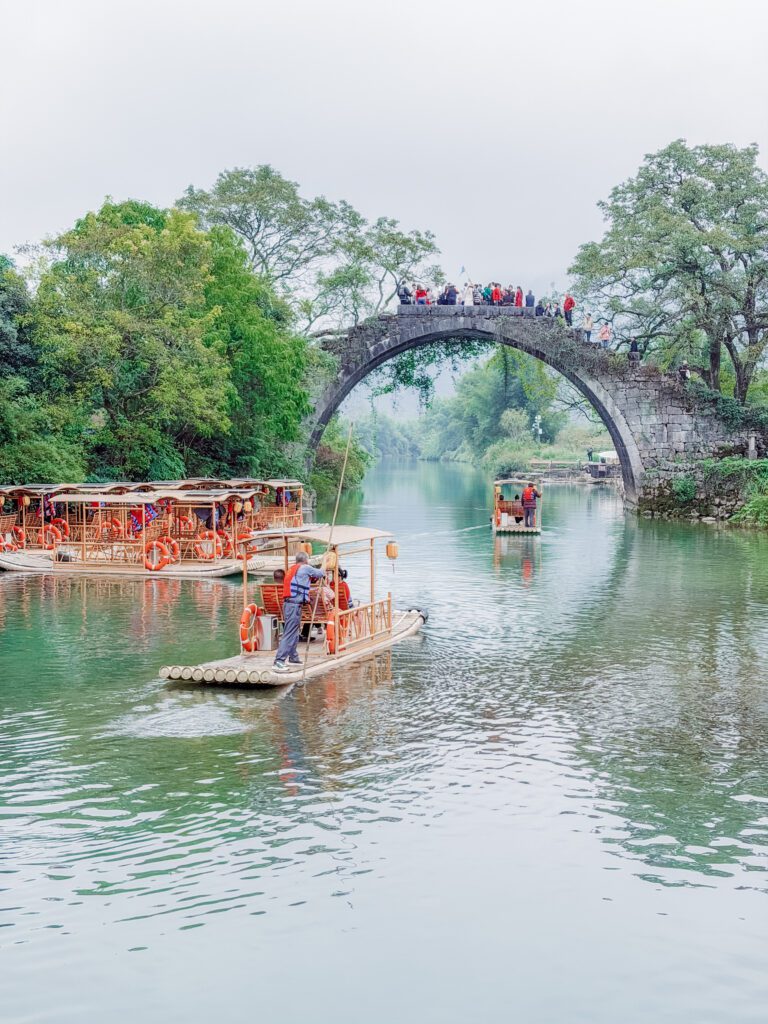
Yangshuo, Guilin – is also a must visit! It is such a beautiful area.

How to Get Around China
Getting around China is very easy, the tips below will help you work out what to do.
Trains
We booked our trains (and we used alot of them!) on Trip. It was so simple and quick, our passport was attached to all our bookings so all you have to do is show it at the entry and you will be let in. Using your passport means you will have to line up at the gate with the person scanning the ID rather than the quicker ID gates the locals can use.
Flights
We booked our internal flights on Trip as it was much easier than trying to book on the Airline sites. We flew from Changsha to Lijiang with Qingdao Air for approximately $80 USD per person and Kunming to Shanghai with China Eastern. It was simple and easy, our tickets were attached to our passport so this is all we had to show at check in. We found that flights got cheaper the closer to your date, however they can sell out as well!
Apps
Download these apps because they’re almost all you’ll use! We took cash and really didn’t need it, everything was handled with the following apps in China.
Didi China – best and cheapest way to get around, you pay in app from your WeChat or Alipay account. It’s basically China’s Uber.
Alipay – almost everywhere accepts Alipay, from a fruit market vendor to train stations and hotels. It’s the biggest payment method in China.
Wexin Pay – second most used payment method in China.
VPN – we always use Surf Shark VPN which worked perfectly in China.
Cash – we had some on us but really didn’t need it except for emergencies when our phone was out of charge etc. even the smallest vendors preferred Alipay or Wexin pay and they rarely have correct change anyway.
Diangping- the place to find restaurant reviews (don’t bother with Google maps or Apple Maps they’re basically no reviews there)
From here you can also connect to Meitan which is the food ordering app(or you can download it too) you do need a local dim with phone number to order food delivery or do what we did and use the hotels phone number.
A map – it’s Chinese Google maps that can work in English. Google maps and Apple Maps aren’t really very helpful in China.
Payment Tips
- Don’t be scared of using the payment apps in China, it may seem strange but it is such an easy system that everyone uses. The locals are all really well versed in the apps and can help you if you get stuck. I was trying to order coffee from Luckin Coffee and it is all done on the AliPay app. I couldn’t work it out but a kind staff member showed me what to do…he didn’t speak English and I don’t speak Mandarin but we worked it out and I was able to order coffee for the rest of my trip! We saw the tiniest vendors with QR codes selling very cheap items and only accepting the app payment, truly it is very easy and payment is instant, the vendor will get a notification to say it has processed and you will also see it on your app. I purchased a ticket at one site but then was refused entry (read about it in our Yangshuo blog!) It was easily refunded back to my on Alipay.
- 2. There is no tipping in China, you don’t need to worry about this at all unless you are in a big city and eating at a very upscale restaurant. Instead of tipping show your appreciation by your polite behaviour and purchasing more or being a return customer. This is appreciated.



China Travel Costs
China is really affordable to travel! We found incredible deals and the best part is that the quality of accommodation in China is so good for the price you pay!
| Budget Level | Food (USD) | Accommodation (USD) | Transport (USD) | Tickets/Activities (USD) | Total per Day (USD) |
|---|---|---|---|---|---|
| Budget | 5 – 15 | 15 – 40 | 3 – 10 | 5 – 15 | 28 – 80 |
| Mid-range | 20 – 50 | 50 – 120 | 15 – 40 | 20 – 50 | 105 – 260 |
| Luxury | 70 – 150 | 200 – 500+ | 50 – 150 | 70 – 200+ | 390 – 1000+ |
Notes:
- Food: Street food and local restaurants for budget; nicer restaurants for mid-range; fine dining and hotel restaurants for luxury.
- Accommodation: Budget = hostels / basic hotels; Mid-range = 3–4 star hotels; Luxury = 5-star hotels or boutique luxury stays.
- Transport: Budget = public buses, metro, shared taxis; Mid-range = domestic flights, high-speed trains, taxis; Luxury = private transfers, business-class trains/flights.
- Tickets / Activities: Museums, parks, and standard tours for budget; guided tours and cultural experiences for mid-range; VIP experiences, private guides, and special attractions for luxury.


Is China Easy to Travel?
YES! China is incredibly easy to travel, once you understand how it works you will be as amazed as we were by the simplicity. Almost all transport from trains and buses to flights can be booked on Trip.com, and everything leaves on time if not even a minute or two early. People are so kind and helpful, if you get lost or confused just ask in a shop and they will direct you. Google maps wasn’t the best while in China but using AMaps is the best option for English speakers as it translates to English. In all honesty the Chinese make their lives (and so ours while we travelled there) very convenient! Food is available everywhere, services are plentiful and it is just easy.



China vs Japan: Which Should You Visit?
If you’re planning a trip to East Asia, both China and Japan offer unforgettable experiences — but in very different ways. China offers dazzling ancient sites like the Great Wall, the Forbidden City, and the Terracotta Army, while Japans charm lies in its historic temples, shogun-era castles, and its unique seasonal traditions.
Food is another world of difference: China’s regional variety spans from spicy Sichuan dishes to delicate Cantonese dim sum, whereas Japan focuses on sushi, ramen, and kaiseki meals, where presentation and seasonality take center stage.
Travel style also varies. China’s vast size often means relying on high-speed trains or domestic flights to cover multiple cities, while Japan’s efficient rail system makes hopping between Tokyo, Kyoto, and Osaka simple and comfortable.
If you’re curious about Japan, check out our 2-Week Japan Itinerary for a full day-by-day guide. For those leaning toward China, our 2-Week China Itinerary will help you plan the perfect journey through its iconic cities, natural wonders, and cultural highlights.

FAQs
Is China safe?
Absolutely! We were never in a situation where we felt in any type of danger. Even when I was walking along without Mike I didn’t feel any kind of threat. In fact the opposite, people were curious with stares but they were also more than happy to help and make sure we were ok! There are surveillance cameras everywhere and that just added to the safe feeling. We watched multiple women leave handbags on benches, go to a bathroom or store and come back with their bag untouched. It is really amazing to see!
Can you travel China without Mandarin?
If you can speak mandarin you are so lucky and you’ll be fine (obviously!)
For those of us who can’t keep your phone ready with Google translate and use it at all times! People are happy to help you this way, press down on the microphone and let them answer you, they love it! We always make sure to learn a few (very basic) words but the locals love that we try, if in doubt a smile goes a long way!
- Hello/NiHao
- Thank you/Xièxiè
- Very good/Fēicháng hǎo
- No, thank you/Bù, xièxiè
- Ok/Hǎo de
- Sorry/Duìbùqǐ
Do you need a tour?
While a tour can be useful as the tour guide will speak Mandarin and translate for you, arrange all the accommodation and know great places to eat. If you want a tour these are the ones that have great reviews and is a good booking platform. We didn’t find that we needed a tour though, with our basic Mandarin, Google Translate (an essential!), Didi and aMaps we got around without any problems at all.
What travel plugs do you need for China?
We saw multiple plugs in our hotel, sadly we didn’t bring a plug for each and it became a little tricky at times. We should have brought our Australian adapter because almost every hotel had an Australian plug( who would have thought!) There was also the 2 prong and the three prong, I suggest this travel adapter and you’ll be ready for anything!
What is the food like in China?
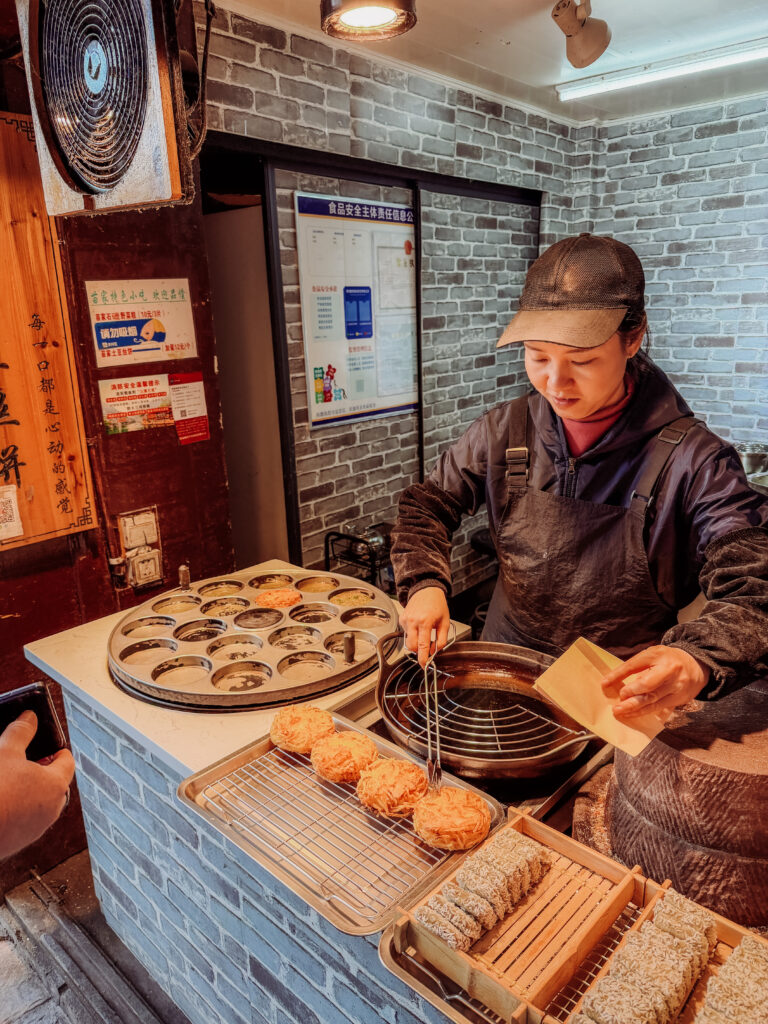
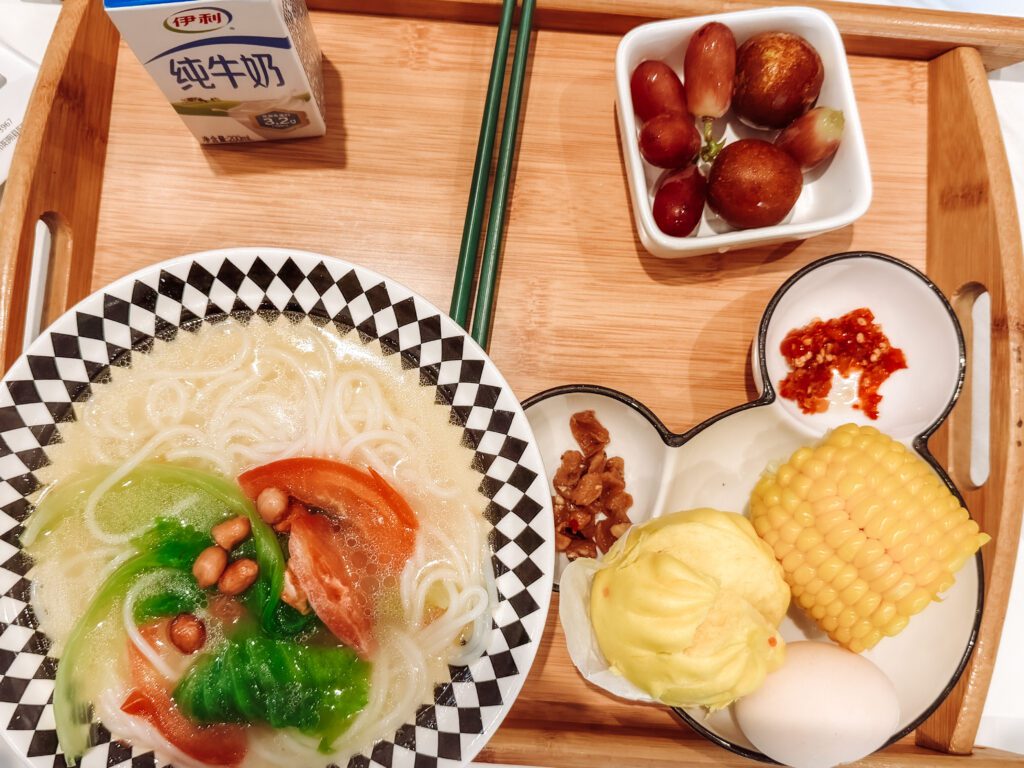
It’s a Chinese food but not as you know it! We discovered that Chinese in Australia has been dulled down in flavour for our pallets. Chinese food in China is a flavour hit! We watched a lady make Mike some noodles and there was like 20 or more sauce and spice ingredients used. The flavour was a surprise at the start of our trip but by the end we were craving those exciting tastes.
You will find some restaurants and hotels serving some western food. We also did indulge in a sneaky and Donald’s or KFC here and there when we needed a French fry and burger hit! You will find these chain stores almost in every town and at train stations or airports.
Gluten free in China – check out how I survived a 4 week China trip as a coeliac! It wasn’t as exciting as what Mike ate but I was fine and got to experience China which is my priority.



That’s everything we wished we knew before we went to China! We had a fantastic time exploring the country. Leave a comment with any questions you have that I haven’t covered here or check out our 2 week China Itinerary and time in the Yunnan region, Zhangjiajie, Guilin or Shanghai!
If you’re planning a longer Asia trip, Japan is another fascinating destination to consider — our Japan travel guide breaks down itineraries, transport, and what to expect.
Next Steps:
- 👉 Plan your trip: 2-Week China Itinerary or our 4-Week China Itinerary
- 👉 Read next: Fenghuang Ancient Village – a beautiful surprise in China
Want to see it all in action? Watch our full China series on YouTube and subscribe to follow along with out next adventure!
Enjoying this guide? Support our blog by buying us a coffee

Where Next?
Exploring Narai Juku: A Hidden Gem on Japan’s Nakasendo Trail
3 Day Osaka Itinerary: Best Things to Do, See, and Eat in Three Days
What to do in Mt Fuji in one day
Things to do in Hakone Day Trip
What to do in Boracay Philippines
16 hours in Changi Airport what to do on a layover
Ko Kood – what you need to know 2026